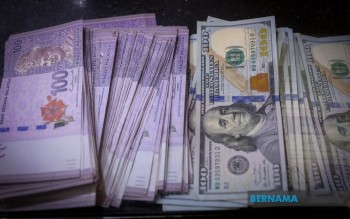
Currency manipulation is one way countries can shift patterns of trade in their favor. By buying foreign currency in the market, a country can artificially change the price of its imports and its exports. Countries do so to boost their own exports, especially if they otherwise have trouble generating the demand their economies need to grow. But currency intervention by U.S. trading partners leads to job losses in parts of the U.S. economy, which is one reason why the United States has run persistent trade deficits.
More From Our Experts
Because of these concerns, in the 2015 Trade Enforcement Act the U.S. Congress required that the Department of the Treasury lay out specific indicators it would use to determine whether a country should be named a currency manipulator. The Treasury has subsequently identified three criteria:
More on:
- a trade surplus with the United States of more than $20 billion
- a current account surplus (the current account is a broader measure of trade that includes foreign debt payments and investment income but is usually close to a country’s overall trade balance) of more than 2 percent of the economy’s gross domestic product (GDP)
- intervention—government purchases of dollars in the foreign exchange market—of over 2 percent of the economy’s GDP, with purchases of foreign exchange in six of the last twelve months
Somewhat confusingly, President Donald J. Trump named China a currency manipulator in August 2019, even though the country did not meet the three criteria of the Trade Enforcement Act. To do so, Trump drew on an older definition of currency manipulation set out in the 1988 Omnibus Foreign Trade and Competitiveness Act that remains on the books. Rather than using specific criteria, the 1988 trade act defines manipulation as action with the purpose of “preventing . . . balance of payments adjustments” or “gaining an unfair competitive advantage in international trade.” This tracker, however, focuses on using the indicators set out by the U.S. Treasury in 2015, as that information provides a clearer nonpartisan guide to currency manipulators.
How to Use the Tracker
The tracker highlights indicator values in red when they exceed the Treasury threshold. Select a fiscal quarter, going back to 2000, to compare twenty-five economies across three indicators. Scroll down to select an economy to view its historical data. Scroll further down to read about the data and view additional resources.
More From Our Experts
About the Data
This interactive tracks twenty-five global economies for evidence of currency manipulation. These economies were selected based on their membership in the Group of Twenty (G20), the scale of their trade with the United States, and the size of their current account surplus as a share of their GDP. (Singapore is a small economy, but it runs one of the world’s largest current account surpluses.)
The tracker analyzes data on the three variables the U.S. Treasury uses to assess countries for manipulation.
More on:
Bilateral trade in this interactive tracks trade in goods between the United States and another country. The U.S. Treasury also uses goods trade, as data on services trade is not available on a timely basis for many of the economies covered, and generally speaking the services trade data is much more poorly measured than goods trade. Services trade generally cannot be directly measured by customs officers at ports and airports.
The current account measures an economy’s trade in goods and services and its cross-border interest and dividend payments. It differs from an economy’s overall trade balance (goods and services) largely because it captures interest payments on debt (or interest earned on cross-border lending) and the profit earned on cross-border investment.
Foreign exchange intervention is in many ways the most difficult variable to assess. The U.S. Treasury looks narrowly at the foreign currency purchased or sold by a country’s monetary and fiscal authorities for its formal reserves, together with any disclosed changes in the forward position of that economy’s central bank. (Many countries buy foreign currency and then swap the foreign currency with their banks for local currency; the commitment in the swap contract to buy the foreign currency back at a fixed price appears in the International Monetary Fund’s reserve disclosure template as a “forward” purchase of foreign exchange.) This definition leaves out the foreign currency bought or sold by sovereign wealth funds, sovereign pension funds, and state banks. As many governments do not disclose their actual intervention, the U.S. Treasury generally estimates intervention in the market by subtracting an estimate of the interest income on existing reserves from the reported increase in the countries’ reserves. That increase can be gleaned from the balance of payments (BOP) data, which should be adjusted to avoid changes in reserves that stem from changes in the valuation of existing reserves, or the reported increase in reserves can be adjusted for estimated valuation changes.
This tracker tries to replicate the Treasury’s methodology, but it potentially leaves out “shadow” intervention—purchases or sales of foreign currency by state banks and sovereign wealth funds.
In order to calculate interest income, this tracker assumes that two-thirds of each country’s stock of reserves is composed of U.S. dollar–denominated assets and the rest is in euro-denominated assets. The dollar-denominated assets grow by the implied interest rate paid on foreign holdings of U.S. Treasury securities; the euro-denominated assets grow by an average of the European Central Bank’s effective deposit and marginal lending rates. The resulting interest income is then subtracted from that quarter’s BOP reserve flow data.
When possible, this tracker includes changes in a central bank’s forward position. But such data is unavailable in a few important cases, most notably Taiwan.
This tracker is updated quarterly, on a trailing four-quarter basis. The U.S. Treasury also looks at the data on a trailing four-quarter basis but assesses the United States’ major trading partners only twice a year.
Additional Resources
Make the Foreign Exchange Report Great Again
Asia Still Lags When It Comes to FX Market Transparency
Looking for the Mysterious Hedging Counterparty of Taiwan’s Lifers